The Envelope in the Drawer: A December Case for Repair Over Retail
December is loud with boxes. Every brand has a version of the same promise: something new, wrapped. I am not against the box. But there is a quieter gift that does more work for the jewelry people already own, and it fits in an envelope. A repair certificate — professional cleaning and inspection, re-tipping worn prongs, replacing a tired clasp, restringing pearls — gives a piece another decade instead of adding one more thing to the drawer.
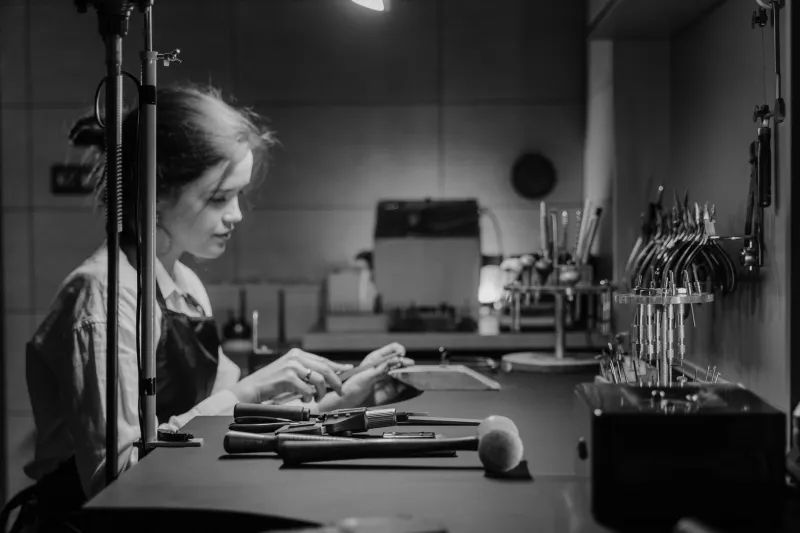
At DeLari Studio, we make and mend handmade jewelry, so we see both sides of this. We see the new piece that makes someone gasp. We also see the necklace that came in because its clasp had been sticky for two years, and the ring that sat unworn because one prong had worn thin. Almost every time, the owner says some version of: I thought it was finished. It usually is not.
The small failure that takes a piece out of rotation
Jewelry rarely stops being worn because someone falls out of love with it. It stops because of a small, fixable annoyance. A clasp that takes two hands and a prayer. A prong that snags a sweater. A pearl strand with a gap where the silk has stretched. A ring that spins because the sizing has gone loose.
Those are maintenance problems, not style problems. And maintenance is unglamorous, which is why it makes a good gift. It says: I noticed the thing you reach for. I noticed it stopped working. Let us fix that.
Is it worth restoring? A short, honest checklist
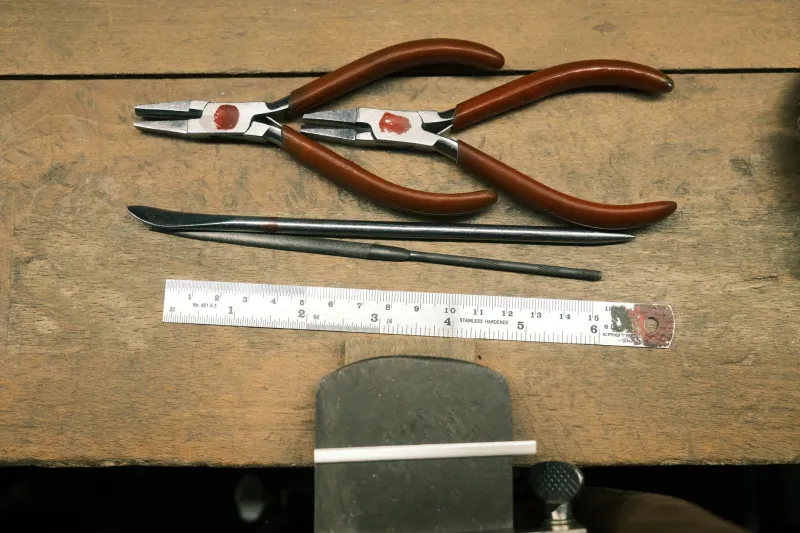
Not everything deserves the bench. A repair certificate should come with a real assessment, not a sentimental blank check. Before you wrap one up, ask a jeweler — ideally someone with a bench, not just a sales floor — to look at the piece. Here is what we consider:
- Structure. Is the metal solid and sound? Solid gold, platinum, and sterling silver can usually be repaired. Plated or costume pieces can be cleaned and plated again, but the wear will return. Be honest about the lifespan.
- Stones. Are settings intact? Is any stone chipped, loose, or missing? A good bench can replace a worn prong or a small melee stone. Replacing a large, specific stone may change the math.
- The repair-to-replacement ratio. If a repair costs more than half the price of a comparable new piece, it may still be worth it for sentimental reasons. But say that out loud. Sentiment is a valid reason; it just is not the same as value.
- Pearls and stringing. Silk stretches. Knots loosen. A strand worn often may need restringing every year or two. That is normal maintenance, not a defect.
- Clasps and findings. Clasps wear out. So do jump rings, ear wires, and the little hidden parts nobody photographs. Replacing them is often the cheapest way to make a piece wearable again.
- Comfort. A ring that pinches, a chain that pulls, a bracelet that catches — these are repair issues too. A piece you avoid wearing is not being preserved. It is being stored.
If the answer is that the piece is too far gone, a good jeweler will tell you. That is useful, too. You can put the money toward a redesign or a new piece without guessing.
What belongs on the certificate
A repair certificate should be specific enough to be useful and flexible enough to be honest. Ours typically covers a professional cleaning and inspection, then a set of common services: re-tipping prongs, tightening stones, replacing a clasp, restringing a pearl strand, refreshing a rhodium finish where appropriate. The final cost depends on what the bench finds, so the certificate should say that plainly.
Include the recipient's name, a line to describe the piece, and an expiration window — twelve months is generous without being indefinite. If you are giving it in December 2026, confirm the studio's holiday turnaround before you promise a date. Bench queues get long this time of year. A repair gift can be a January gift, and that is fine. The point is the piece comes back into rotation, not that it arrives before the tree comes down.
How to give it without making it feel like a chore
Presentation matters, because a repair certificate can sound like homework if you let it. Do not hand someone a form and a list of their jewelry's flaws. Give it the way you would give a good bottle of wine: simply, with a note.
Tuck the envelope into the jewelry box, not under the tree by itself. Write one specific line. For the pearl strand you wear to every dinner. For the ring that was your grandmother's. For the chain you never take off. Then offer to handle the logistics — the drop-off, the pickup, the follow-up call. The errand is half the gift.
Do not take a piece without asking. Surprise repairs are a bad idea for anything with sentimental weight. And if the recipient lives far away, call a reputable jeweler near them first and confirm they do bench work. A certificate is only as good as the bench behind it.
The quieter sustainability case
There is a sustainability argument here, but I want to make it without turning a necklace into a moral test. New jewelry has a footprint: mined metal, cut stones, shipping, packaging. Repair keeps existing material in use. The greenest piece is often the one already in your drawer — not because new pieces are bad, but because maintenance is the least dramatic way to make something last.
That is also how heirlooms actually happen. Not through one perfect purchase, but through a series of small decisions: re-tip the prong, replace the clasp, restring the pearls, clean it once a year. The piece survives because someone kept saying yes to it.
A box adds one more thing to keep track of. An envelope gives something back. This December, if you are shopping for someone who already has a jewelry box full of stories, consider the repair certificate. It is not the flashiest gift under the tree. It is the one that will still be in rotation next year.