The Ring Came Back Twice: Reading a Repair Log Like a Family Album
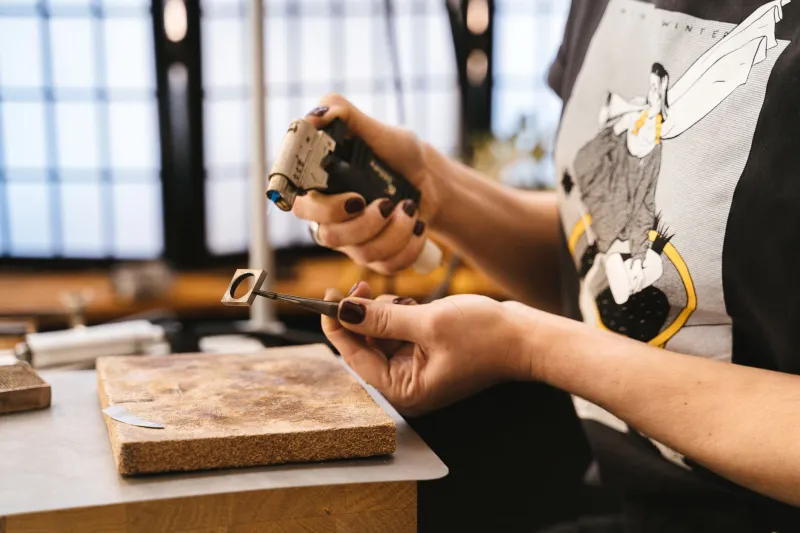
There's a shoebox in the back of the studio that nobody dusts. Inside it: index cards, a few decades' worth, each one scrawled with a name, a date, and a complaint. Prong worn through, third time. *Clasp opened on its own, customer nearly lost it on the L.*Stone loose after two winters. We call it the repair log, which makes it sound more official than it is. Really it's a diary written by other people's hands.
Most jewelry marketing lives in the first five minutes of ownership. The box, the lighting, the little cloth. The repair log lives in year nine. And after enough years of writing in it, you start to notice patterns — not about customers, but about makers.
What a Comeback Actually Means
Here's a thing worth sitting with: a piece that returns to the bench is not automatically a failure. Sometimes it's the opposite. A ring that comes back after eleven years of daily wear, with prongs worn thin from gripping steering wheels and grocery carts, is a ring that got used exactly as intended. Metal wears. That's physics, not negligence. The question isn't whether a piece will eventually need attention. It's whether anyone will be there to give it.
A prong retipped in year eleven costs a fraction of a new setting. A loose stone caught early is a twenty-minute job. A loose stone caught late — say, after it's been riding around in a coat pocket for a month — is a hunt through the carpet and a much sadder conversation.
So when we read the log, we're not looking for pieces that never came back. We're looking for pieces that came back and got handled well. Those are the entries we trust.
The Clasp Is Where Promises Go to Die
If you want to know how a chain was made, ignore the pendant and look at the clasp.
It's the least glamorous component and the most mechanically stressed. It opens and closes thousands of times. It takes the full weight of the piece every time someone tugs it over their head. And in our log, clasp failures cluster in a very specific way: they almost always trace back to the same handful of cheap findings, the kind that get swapped in to hit a price point.
A maker who spends real money on a solid clasp and a proper jump ring is telling you something. They're telling you they thought about the tenth year while they were still working on the first. It's not romantic. It's just honest engineering, and honestly, it's rarer than it should be.
When you're shopping, flip the piece over. Ask what the clasp is made of and whether it can be replaced down the road without cutting the chain. If the answer is a shrug, that's information.
Stones Loosen Because Life Happens
Every set stone in the world is held by a small amount of metal doing quiet, constant work. Temperature swings. Hand lotion. The particular violence of a gym locker. Over years, that metal fatigues, and the stone starts to shift by fractions of a millimeter — invisible until it isn't.
This is normal. What matters is whether your maker told you it was normal, and whether they'll check it for you without acting like you've inconvenienced them. We do a free stone check on anything we've made, no appointment needed, because it takes four minutes and it prevents the worst phone call in this business.
Ask any jeweler: Do you inspect settings after purchase, and is there a charge? How they answer that one question tells you more than an entire showroom visit.
What the Log Taught Us About Our Own Bench
Going through the records was humbling. A few years back we changed a supplier for one small component, and the log lit up within eighteen months. Nothing catastrophic — a run of clasps that developed a stubborn habit of self-opening. We caught it, we replaced them free for anyone affected, and we still hear about it from one customer who likes to remind us at parties.
That's the trade. You can't build a reputation on pieces that never fail, because that's not a real category. You build it on what happens after they do. The log doesn't embarrass us. It's the closest thing we have to a reference letter.
Four Questions for the Counter
When you're standing at a case, or emailing a small studio, these are the ones that cut through:
- How long have you been repairing your own work? A maker with a bench and a habit of standing behind it will answer easily.
- What's your turnaround on a re-tip or a re-set? Vague is bad. Weeks, not seasons, is good.
- Can I see the inside of a band or the back of a setting? Finish work on the parts you weren't meant to see is the whole game.
- If this fails in year five through no fault of mine, what happens? Listen for a policy, not a promise.
None of this requires a big brand or a famous name. In fact, the smaller the studio, the more likely the person answering your email is the person who will one day be holding your ring under a loupe. That's not a small thing. That's the entire thing.
The Shoebox Stays
The box is still back there, still undusted, still filling up. Some of those cards are twenty years old. A few of the names on them have since brought in their kids' pieces, which is its own kind of review.
Showroom shine is a first impression, and first impressions are easy to stage. A repair history is a long marriage, with all the small maintenance that implies. If you're buying something you intend to live in — and around here, that's the only kind of jewelry we're interested in — ask about the marriage, not the first date.