Your Skin Is a Better Judge Than the Label: Shopping for Jewelry That Won't Fight Back
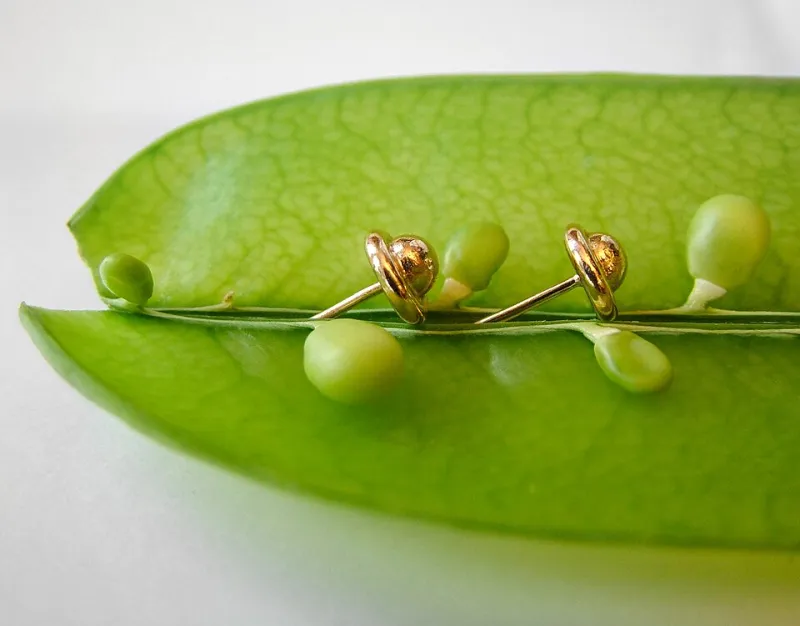
Photo: W.carter, CC BY 4.0, via Wikimedia Commons
There's a particular kind of disappointment that arrives about six hours after you put on a new pair of earrings. First nothing. Then a low, warm itch behind the lobe. By evening your skin has opinions, and by morning it's had a full conversation without you. If that sounds familiar, you are not delicate and you are not difficult. You're just wearing the wrong metal.
Reactive skin is not a personality flaw, and it's far more common than the jewelry aisle would have you believe. What follows is the practical version of the conversation — the one that skips the gauzy promises and gets to what actually helps when you're standing in a studio or scrolling a maker's shop at eleven at night.
First, the Word That Isn't Doing Any Work
"Hypoallergenic" is not a regulated term in the United States. There's no federal standard behind it, no test you have to pass, no certificate you can wave. It means roughly what "natural" means on a granola bar: pleasant, reassuring, and entirely up to the seller's conscience.
That doesn't make every maker who uses the word a villain. It just means the label can't do the thinking for you. In the European Union, nickel release from items in prolonged skin contact has been capped since the 1990s under the Nickel Directive, later folded into REACH. The US has no equivalent federal rule. So the practical burden lands, unfairly, on your own earlobe.
What's Probably Happening
The usual suspect is nickel, a cheap and cooperative metal that shows up in almost everything alloyed, including a lot of gold that isn't quite what you assumed. Metal allergy is also one of the few that's genuinely common — and it's a contact allergy, which means it's acquired. You can wear the same earrings happily for fifteen years and then, one Tuesday, stop being able to.
That timing trips people up. Reactions are typically delayed, showing up anywhere from a few hours to a couple of days after contact. Your skin isn't overreacting in the moment; it's filing a report. Which also means the new necklace may have been harmless and the culprit was the clasp on the bracelet you wore two days ago. Change one thing at a time or you'll never learn anything.
One more distinction worth keeping straight: the green-gray smudge that brass and copper leave on skin is a chemical reaction with your sweat and lotion, not an allergy. Irritating to a white shirt, sure. But a stain is not the same as a rash, and confusing the two will cost you a lot of nice jewelry.
Patch Test Like You Mean It
You can do a reasonable job of this at home in about three days, and it beats guessing.
- Pick a quiet patch of skin. A spot just behind the ear, or the soft inside of the forearm. Nowhere you'll scrub or sweat much.
- Clean it and let it dry. No lotion, no perfume, no sunscreen on that square inch.
- Tape the piece down — or just wear it there. For a chain, a couple of inches coiled and taped is fine. For a post, wear it in the ear for a few hours.
- Leave it 24 hours, then check. Then check again at 48 and 72. This is the part everyone skips, and it's the part that matters, because the reaction you're looking for is the slow one.
- Watch for redness, raised texture, tiny bumps, or that heat-and-itch feeling. A faint pink line under a taped piece is often just the tape.
If you react, stop. Don't power through a "breaking-in" period. Skin doesn't break in.
Metals That Tend to Behave
No metal is universally safe, and anyone who claims otherwise is selling something. But the risk ladder is reasonably well understood, and it's worth climbing.
Usually well tolerated: niobium, titanium (including the common ASTM F136 implant-grade stuff), platinum, and high-karat gold — 18k and up, though many people do fine with 14k yellow. The higher the gold content, the less room there is for nickel in the mix.
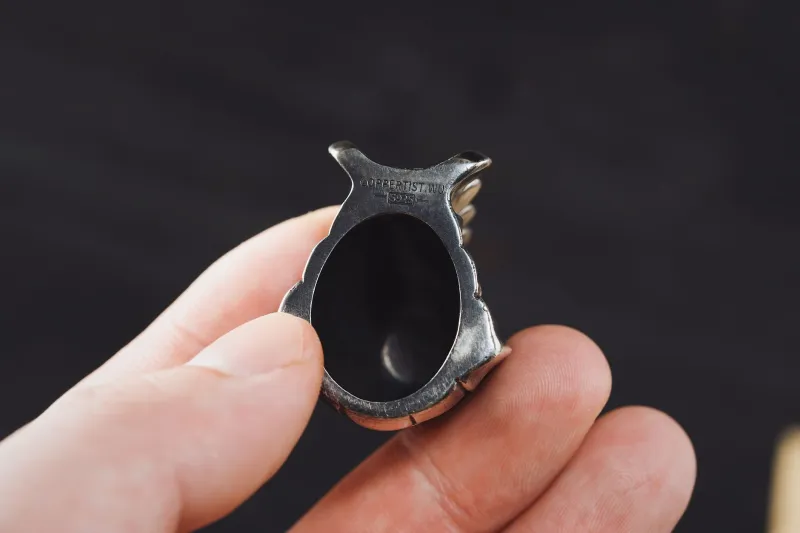
Sterling silver is the interesting middle case. Good 925 silver is fine for most people, but the other 7.5 percent is usually copper, and some skin simply doesn't enjoy copper. Argentium silver, which swaps in germanium, is worth trying if sterling has ever left you itchy.
Proceed with curiosity: brass, bronze, and copper — lovely, warm, patina-rich, and reliably reactive for a minority of wearers. Gold-filled is a real category with real thickness to it; gold-plated is a whisper, and the whisper wears off. White gold is frequently rhodium-plated, which is fine until the plating thins and the alloy underneath introduces itself.
The Four Questions Worth Asking
You don't need to interrogate anyone. You just need four answers, and any maker worth your money will enjoy being asked.
- What's the base metal, specifically? "Gold" is not an answer. "14k yellow gold over a brass core" is.
- What are the posts, hooks, and clasps made of? These are the parts touching skin longest, and they're often where budgets get quietly trimmed. Many studios will swap in titanium posts on request — ask.
- How thick is the plating, and is it sealed? Two microns and a lacquer layer buys you years. A quarter-micron buys you a season.
- Can you make this one piece in a different metal? A good custom studio can. If the answer is an immediate no, you've learned something useful.
Living With It, Not Around It
A few small habits stretch the life of any piece. Put jewelry on last and take it off first — after lotion, after perfume, before bed. Wipe pieces with a soft dry cloth at the end of the week; sweat is the accelerant in most of these reactions. Skip the pool and shower where you can, and know that a thin coat of clear nail polish on a suspect clasp is a stopgap, not a repair.
None of this asks you to give up jewelry you love. It asks you to stop letting a label make the decision for you. Your skin is the honest party here — it just needs three days and a little patience before it weighs in.