Hands Have Weather: Sizing a Ring for the Life You Actually Live
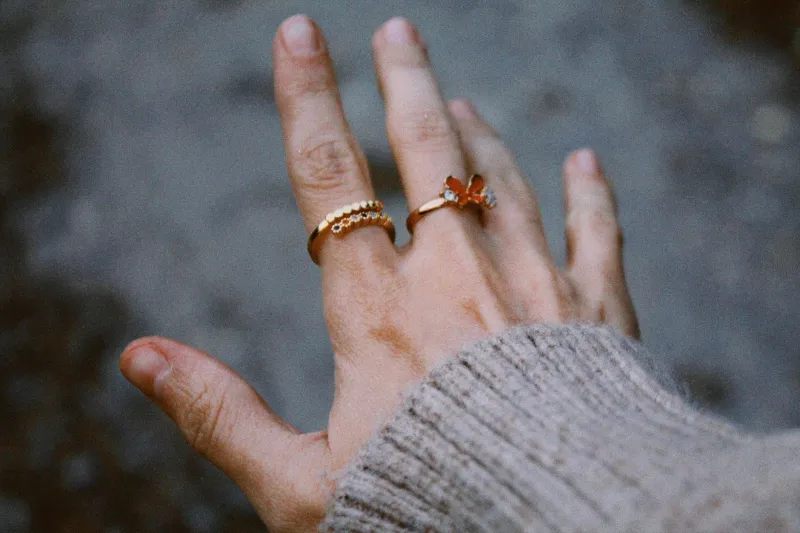
The first time someone tells us a ring is “too big,” it is usually July. The first time they tell us it is “too tight,” it is usually January. Same ring, same hand, same person. The only thing that changed was the weather, the salt, the sleep, the walk, the air conditioning, the eight glasses of water—or the lack of them.
A ring size feels like a fact. In practice, it is a snapshot. And if you have ever bought a ring in one season and tried to live with it in another, you already know the snapshot can be misleading.
At DeLari Studio, we think of fit as something closer to a living measurement. Not a number to memorize, but a relationship to maintain. That is good news for anyone shopping in the US right now, staring at a ring sizer and wondering whether to trust the loop that came in the mail.
The number is a starting point, not a verdict
A US ring size is based on a measurement: the inside circumference or diameter of the band, checked against a mandrel or a sizing gauge. That number is useful. It gets everyone in the same conversation. But it does not know that your hands run warm after a workout, that your fingers swell on a salty restaurant meal, or that your knuckles are wider than the base of your finger.
Most jewelers account for this in small ways. We measure at different times of day when we can. We ask what the ring is for—everyday wear, a wedding band, a stack, a right-hand piece. We notice whether the band is wide or narrow, whether it will sit alone or with others, and whether the wearer has worn rings before. A size is the beginning of the fitting, not the end of it.
What changes a finger by lunch
Fingers are not rigid tools. They are tissue, bone, blood flow, and fluid. Heat tends to expand the soft tissue and increase blood flow, which can make a finger feel fuller. Cold does the opposite. Hydration matters, too—a long, dry winter indoors can leave hands feeling different from the same hands in humid summer air. Salt, alcohol, travel, altitude, hormones, and ordinary physical activity can all nudge the fit.
This is not a medical lecture. It is simply the reality of wearing something snug around a part of the body that changes all day. In the US, we ask a lot of our hands: winter gloves in Minneapolis, sun exposure in Phoenix, dry office air, hot yoga, cold brew, garden hose, dish soap, gym chalk. The ring lives through all of it.
A ring that fits at 8 a.m. may spin at 4 p.m. A ring that feels secure after a walk may feel tight after a salty dinner. None of that means the ring is defective. It means the hand is alive.
Why January rings spin in July
Metal does expand and contract with temperature, but the effect on a gold or platinum ring is tiny compared with what happens to the finger. The bigger variable is you. Summer heat and humidity often leave fingers slightly fuller. Winter cold and indoor heating can leave them slightly slimmer. For many people, the difference is a quarter to half a size—not dramatic, but enough to turn a comfortable band into a spinner or a snug ring into a morning struggle.
That is why a ring bought in one season can feel wrong in another. It is also why we are cautious about resizing too quickly. If a ring is loose only in hot weather, or tight only in cold weather, the answer may not be a permanent change. It may be a temporary adjustment, a different band width, or simply waiting until the hand is in its most common condition.
The width problem nobody warns you about
The wider the band, the tighter it feels. A two-millimeter band and a six-millimeter band can share the same size number and behave completely differently. Wide bands cover more of the finger and leave less room for the skin to move. Stacking rings adds another layer of fit. A ring that works alone may feel crowded when paired with two others.
This is where handcrafted jewelry asks for a little patience. We would rather talk through the whole stack than force one ring to do all the work. Sometimes the fix is not a resize at all. It is a thinner band, a slightly looser fit on the widest ring, or a sizing bead that keeps a heavy ring from rotating without making it too tight.
Resize, adjust, or wait?
Permanent resizing makes sense when the difference is consistent and substantial—generally more than about half a size, or when the ring is honestly uncomfortable in normal conditions. For smaller seasonal shifts, sizing beads, adjustable inserts, or a spring-loaded ring guard can be a gentler answer. They are not elegant forever solutions, but they can get you through a season without altering a setting.
Some rings are easier to resize than others. Plain bands are straightforward. Eternity bands, heavy texture, channel-set stones, and delicate settings can limit what a jeweler can safely do. Repeated resizing stresses metal and settings. That is another reason to measure in the conditions you actually live in, not in a hurry.
A simple at-home check for US readers
Start with the ring you already own and wear. Put it on in the morning, before coffee and before a salty breakfast. Wear it through a normal day. Check it again after lunch, after a walk, and after dinner. Notice whether it spins freely when your hand is cold, leaves a faint mark when you are warm, or slides over the knuckle with no resistance at all.
Then try the gentle shake test: let your hand hang down and shake it lightly. If the ring flies past the knuckle, it is too loose for everyday wear. If it will not pass the knuckle without soap, it is too tight. You want a ring that goes on with a little resistance and stays put without pinching.
If you are deciding whether to size now or wait, ask yourself one question: which condition describes most of your life? If you are buying in November for a summer wedding, do not size only for cold hands. If you are buying in July for a winter anniversary, leave room for the hand you will have in January. When in doubt, wait a week and measure again. The ring can wait. The hand is already telling you what it needs.
A ring should fit the hand that answers the door, carries the groceries, types the email, and reaches for someone else’s hand. That hand has weather. Size for the weather, not just the number.