The Two-Inch Verdict: How a Clasp Decides Whether a Necklace Ever Leaves the Box
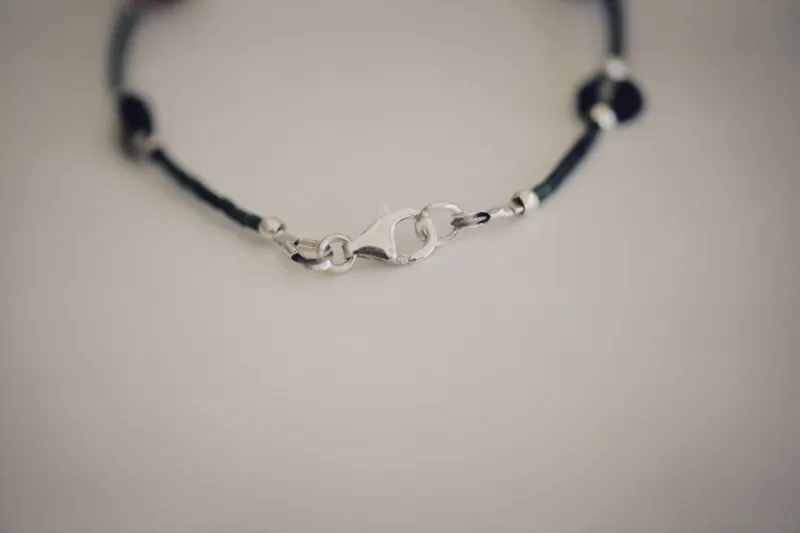
The clasp is not the star. It sits at the back of the neck, under hair, against skin, and almost never makes the photograph. But it is the part you touch most. It is also the part that decides whether a necklace becomes a Tuesday-morning habit or a velvet-box resident. The front of a piece is for the room. The clasp is for you.
The part you touch most and see least
Think about the last time you put on a necklace in a hurry. You did not admire the chain. You reached behind your neck and made a small, blind negotiation with a piece of metal. If that negotiation took two seconds, the necklace joined your day. If it took twenty, or required a mirror, or ended with a pinched finger, the necklace probably went back into the drawer.
That is the quiet power of the clasp. It is a two-inch verdict on daily wear. Makers know this, even when buyers do not. A chain can be beautifully soldered and a pendant perfectly set, but a fussy closure will undo all of it in the real world. The clasp is where craftsmanship meets routine.
Four closures, four different bargains
Most necklaces live with one of four common closures, and each one makes a different bargain with the wearer.
A lobster claw is the default for a reason. It is familiar, secure when well made, and easy to replace. But cheap versions snag hair, lose spring tension, and turn into a small test of patience. A good lobster claw should open smoothly and close with a firm click, not a grind. It should also be sized to the chain and the pendant. A heavy pendant on a tiny claw is a structural argument waiting to happen.
A box clasp is the elegant option, often hidden inside a wider chain or a strand of beads. When it fits well, it feels like a secret. When it does not, it feels like a puzzle. Box clasps demand precision, and they are less forgiving of weak hands or limited dexterity. They also need a maker who thought about repair access, because a box clasp that cannot be opened by a jeweler is not a clasp. It is a sealed door.
An S-hook is the old-fashioned one, and it has a certain honesty. No springs, no magnets, no hidden mechanisms. Just a hook that catches a loop. It can be wonderfully easy for some wearers and quietly insecure for others. The S-hook does not fail dramatically. It simply lets go when you least want it to, usually near a coat rack or a sink.
A magnetic closure is the friendly one. It is easy to fasten, kind to weak hands, and often a good choice for people who have stopped wearing necklaces because the back of the neck became a daily frustration. The trade-off is security. A magnet that is strong enough for daily wear can still release under a firm tug, and a magnet that is too strong can be hard to separate. It is a good tool, not a universal answer.
What wear patterns confess
The clasp also keeps a record. A scratched lobster claw tells you it has been opened and closed thousands of times. A stretched loop or a bent hook tells you the piece has been pulled, caught, or forced. Tarnish in the crevices of a box clasp tells you it has been sitting. Shine on one side of a clasp tells you which hand does the fastening.
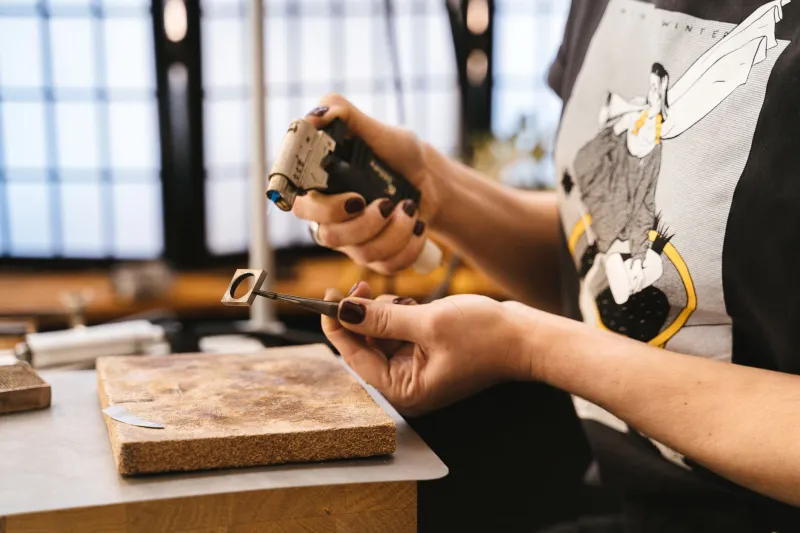
In the studio, we read these marks like a short diary. A clasp that has been replaced twice is not a repair problem. It is a design message. A clasp that opens during the day is not a mystery. It is an argument the necklace is losing. The least photogenic part of the piece is often the most honest witness to how it is actually lived with.
The studio-side math
Makers balance a few things when choosing a clasp: the weight of the piece, the wearer's dexterity, the look of the back, the cost, and the ability to repair it later. A heavy chain needs a closure that can carry the load. A delicate chain needs a clasp that will not overwhelm it. A person with arthritis needs a clasp that can be operated without a mirror and without a fight. A person who never takes a necklace off needs a clasp that will survive the gym bag, the sweater, and the shower.
Repair access is the underrated part. Ask how the clasp is attached. Ask whether it can be replaced without cutting the chain. Ask whether the maker keeps spare parts. A clasp is a wear item, like a tire. It should be serviceable. If a closure is soldered shut or built into a design that cannot be opened, you are not buying a necklace. You are buying a future headache.
Five checks before you commit
Before you buy or commission, do a small, unglamorous test. Open and close the clasp ten times. It should feel firm, not grinding, and it should not require a fingernail. Tug gently with the chain supported in your hand. It should hold without drama. Try fastening it behind your neck without a mirror. If you cannot, ask about a different clasp, a longer chain, or an extension. If you have weaker hands, try the closure with your eyes closed. And always ask how the clasp is attached and how it would be repaired. The answers tell you more about the maker than the front of the piece ever will.
The emotional hinge
A clasp is a small act of trust. You do not look at it, but you rely on it. A good one disappears into the routine. A bad one becomes a daily reminder that the piece was designed for a photograph, not a life. So when you are standing at a counter or sitting in a consultation, bring up the back. Ask about tension. Ask about security. Ask about weak hands and repair access. The least photogenic part of the necklace is where the relationship gets decided.
The front is for the room. The clasp is for you. Make the argument count.