The Nightstand Tray: What Jewelry Does After the Lights Go Out
You take off your watch. Maybe the rings come off, maybe they don’t. You turn off the lamp, and for the next eight hours your jewelry is on its own—on your hand, against a pillow, under a blanket, in the dark. That’s not a pause. It’s a shift.
Most jewelry advice focuses on the waking hours: how to clean it, how to store it, how to layer it. But the night is where a lot of quiet decisions get made. A clasp loosens. A ring leaves a mark. An earring back presses into a lobe. None of this is dramatic. All of it is useful.
The Dawn Tightness
If you’ve ever slid a ring on at seven in the morning and found it snugger than it was at noon the day before, you’re not imagining it. Overnight, fluid shifts. Hands swell. A salty dinner, a warm bedroom, the way you sleep with one arm under the pillow—all of it can make a ring that fits fine at lunch feel like a tourniquet at dawn.
This is not automatically a sizing problem. It’s a timing problem. The eight-hour test is simple: wear the ring overnight for a week and check it when you wake up. If it leaves a mark that lasts past your first cup of coffee, pay attention. If it’s a little snug and loosens by mid-morning, that’s ordinary. Your hands have a schedule. Your jewelry should know about it.
The Pillow Is a Pressure Test
Earring backs are small machinery. Butterfly backs can press into the back of a lobe when you sleep on your side. Screw backs are more secure but can work loose over time. Neither is “bad”—they just behave differently under eight hours of pressure.
Chains have their own overnight life. A lobster claw clasp is a tiny lever, and a pillow is a soft, persistent force. Most clasps won’t open. But the ones that do tend to do it at three in the morning when you’re not looking. The fix isn’t to stop sleeping in jewelry. The fix is a ten-second check before bed: give the clasp a gentle tug, twist the earring back, make sure the ring isn’t so tight that it takes lotion to get it off. That’s not fear. That’s maintenance.
What’s Actually Safe to Sleep In
There’s no single rule, but there is a spectrum. Solid hoops with secure closures are generally fine. Studs with screw backs are fine. Thin chains with a healthy lobster claw are usually fine. Dangle earrings are not—they find your neck. Long necklaces are not—they find your throat. High-set rings are not—prongs catch sheets and hair. Bangles are not—they clang against each other and against your wrist.
The point is not that jewelry is fragile. It’s that jewelry can interfere. The eight-hour rule isn’t about protecting a precious object from the world. It’s about protecting your sleep from your jewelry, and your jewelry from the things sleep does to it.
A Three-Minute Bedtime Check
- Tug the clasp. If it opens with almost no resistance, it’s a daytime piece until it’s repaired.
- Twist the earring back. If it spins freely, it may not make it to morning.
- Slide the ring over the knuckle. If it needs lotion, it’s too tight for overnight.
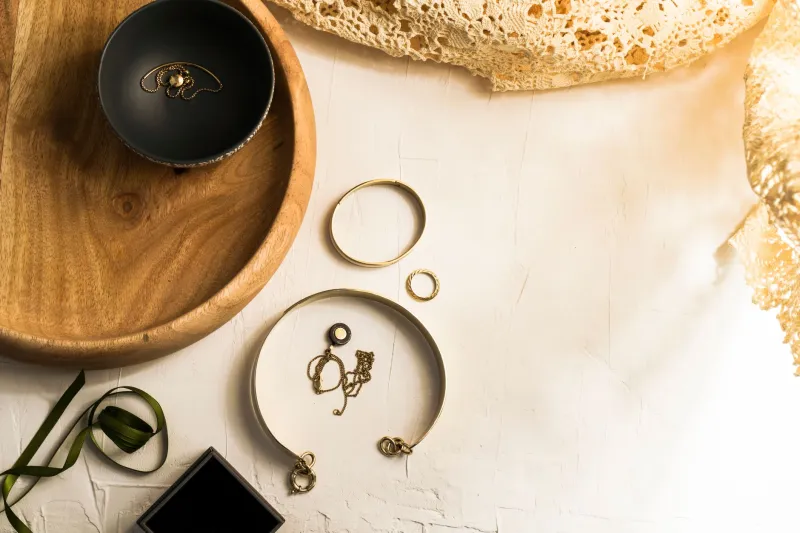
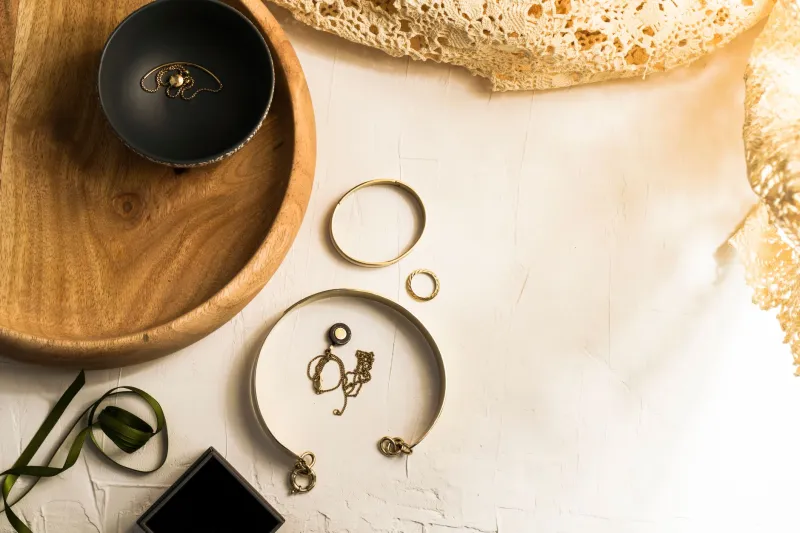
- Put a small tray on the nightstand. Not the bowl by the sink—that’s for daytime. The nightstand tray is for the eight-hour shift.
- If you’re a restless sleeper, take off the dangles. Sleep is not a styling opportunity.
The Point Isn’t Fragility
Jewelry is made to be lived in. But lived in includes slept in. The nightstand tray isn’t a velvet box or a warning label. It’s a habit. It says: I know what happens in the dark, and I’m paying attention.
At DeLari, we make pieces meant to stay on. But staying on means listening. The morning tightness, the clasp that loosened, the earring that poked—these are not failures. They’re information. A ring that fits at noon and bites at dawn is telling you something about your hands. A chain that slips off the pillow is telling you something about its clasp.
Tomorrow night, before you turn off the lamp, take three minutes. Tug, twist, slide, set down. Then sleep. Your jewelry will do its eight hours either way. The question is whether you’ll know what it did.