The Same Five, All Year: A Jewelry Experiment in Loyalty
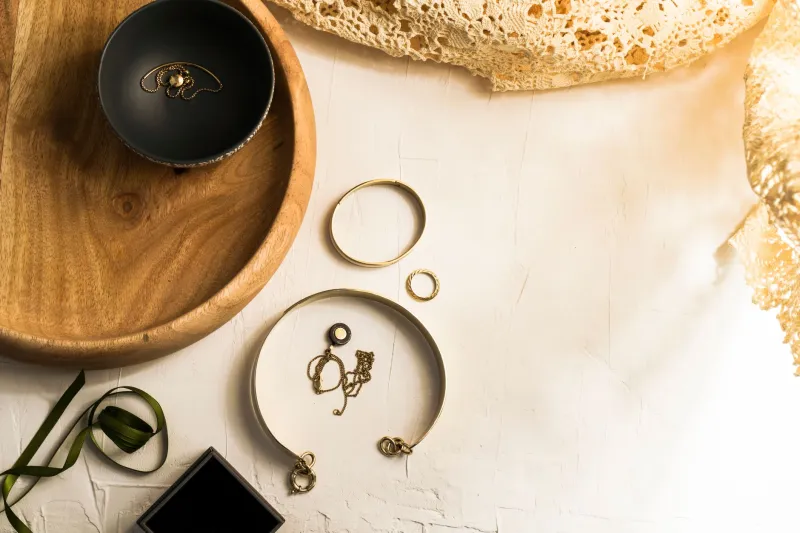
On November 12, 2025, I lined up five pieces on a square of gray felt: a plain gold wedding band, my grandmother's signet ring, a thin chain with a dime-sized compass charm, a pair of small hoops, and a silver bracelet I bought at a craft fair in 2019. Everything else went into a shoebox on the top shelf. The rule was simple: wear only these five for a full year. I finished on November 11, 2026. Twelve months later, I know a lot more about my jewelry—and a little more about myself.
I did not do this to prove I could suffer. I did it because my jewelry drawer had become a place where good things went to be admired and ignored. I had pieces for weddings, pieces for weekends, pieces that matched a certain sweater, pieces I kept because someone gave them to me and pieces I kept because I felt guilty about not wearing them. The five-piece limit was supposed to be a cleanse. It became something closer to a field test.
The Rules, and the One Loophole I Allowed
Five pieces, one year, no rotation. I could clean them, repair them, resize them, and restring them. I could not replace them, swap them out for a season, or keep a sixth piece in my purse for emergencies. The only exception I gave myself was safety: if a ring got too loose during a cold snap or a clasp failed on a trip, I could take the piece out of commission until it was fixed. I could not substitute something else in its place.
That sounds stricter than it was. The hard part was not the missing earrings or the stack of bracelets I had trained myself to grab on the way out the door. The hard part was noticing how often I used jewelry to signal a mood, a season, or a version of myself I wanted to project that day. With five pieces, I had to let the jewelry be jewelry and let the mood take care of itself.
What Earned Its Keep
The wedding band never asked for attention, which is exactly why it won. It survived dishwashing, gardening, a very cold Thanksgiving parade, and one unfortunate encounter with a doorframe. It picked up tiny scratches the way a good pair of boots picks up scuffs—not damage, just evidence. I stopped thinking of it as a symbol I was supposed to notice and started thinking of it as a tool I was allowed to live in.
The hoops were the surprise. I wore them to the grocery store, to a July 4 block party, through airport security in a TSA bin, and to bed more nights than I should admit. They were light enough to forget and substantial enough to look intentional. Small hoops are not a compromise. They are a whole personality.
The compass charm chain was the piece I expected to baby, and I did. It caught on a sweater in February and I spent twenty minutes untangling it over the kitchen sink. After that, I started checking the jump ring every Sunday, the way some people check their smoke detectors. The chain was delicate, but the clasp was honest. That mattered more than I expected.
The Piece That Almost Failed
The silver bracelet was the problem child. The clasp had always been a little soft, and by March it was opening at the slightest tug. I could have retired it to the shoebox and called the experiment a wash. Instead, I took it to a local bench and asked for a new clasp. The repair cost thirty-eight dollars, which felt excessive for a bracelet I had bought for less than that at a craft fair. I paid it anyway.
The jeweler replaced the clasp, tightened the hinge, and polished the worst of the scratches without erasing them. When I picked it up, the bracelet felt heavier—not in weight, but in seriousness. Someone had put their hands on it. Someone had decided it was worth fixing. I wore it more after the repair than I had in the previous three years combined.
That is the part no shopping guide tells you: repair changes the relationship. A piece that has been fixed is no longer just a purchase. It has a record. It has a before and an after. It has a small story about the month you decided it was worth keeping.
Dust Is Data
The shoebox on the top shelf was not a neutral observer. Every few weeks I opened it and looked at what I was not wearing. Some pieces I missed immediately—a pair of pearl studs, a wide cuff that felt like armor. Others I had forgotten completely. That was useful information. The earrings I thought were essential had been living on reputation. The necklace I had bought for a specific dress had never really been about the dress. It was about the person I imagined I would be when I wore it.
A hard limit makes you honest about cost per wear, but it also makes you honest about story per wear. Some jewelry carries a story you want to tell every day. Some carries a story you are ready to put down. Neither is a failure. The shoebox was not a graveyard. It was a waiting room.
What Craftsmanship Looks Like From the Inside
By the end of the year, I had stopped judging my five pieces by how they looked on the first day and started judging them by how they behaved on the four-hundredth. The wedding band had a smooth interior that never caught my skin. The signet ring had a thick shank that kept its shape. The hoops had hinges that still snapped shut after a year of daily use. The chain had a clasp that felt secure without feeling fussy. The bracelet had a new clasp that made the old one look like a placeholder.
That is the quiet work of handmade jewelry. The front of a piece is for everyone else. The back—the clasp, the hinge, the jump ring, the solder joint—is for the person who wears it. A year of wearing the same five pieces taught me to look at the back first.
The Stories That Stayed
My grandmother's signet ring was the piece I thought would feel heaviest with history. It did, at first. Then it became ordinary, which is the best thing that can happen to an heirloom. It stopped being a museum object and started being a ring I wore to the hardware store. The compass charm became a small daily reminder to check my direction, which sounds cheesy until you have spent a year trying to simplify your life and realized you still need help finding north.
On November 12, 2026, I will open the shoebox and decide what comes back. I already know it will not be everything. The five-piece limit did not make me a minimalist. It made me a better editor. I want jewelry that can survive a Tuesday, not just a special occasion. I want pieces that can be repaired without a speech. I want the kind of craftsmanship that gets better at the back of the piece, where no one is looking.
And I want to keep wearing the same five for a while longer—not because I have to, but because they have earned it.