The Lending Library of Small Things: Seven Days in Borrowed Jewelry
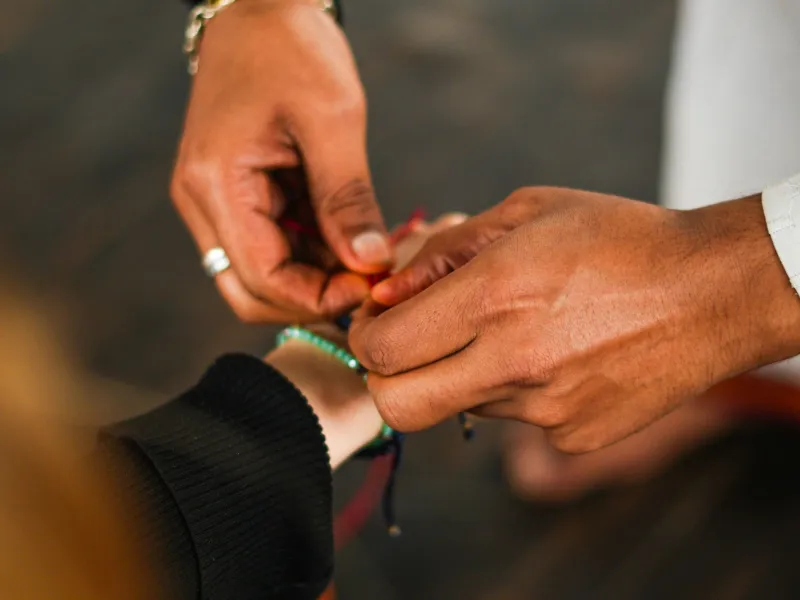
On a Tuesday in November, my neighbor Elena handed me a pair of small hammered silver hoops in a folded square of flannel. I handed her my grandmother's thin gold bracelet, the one with the worn clasp I check three times a day. We had agreed to a seven-day swap: one meaningful piece each, worn as if it were our own.
This was not a style experiment. It was closer to a trust fall with earrings. By the end of the week, I had learned more about my own jewelry habits than I had from a decade of buying it.
The Swap, and the First Strange Morning
Elena's hoops were lighter than anything I usually wear. They had a soft, uneven surface, the kind that comes from a small hammer and a patient hand, and they made a tiny sound when I turned my head too fast. For the first two mornings, I forgot they were there. By the third, I kept touching my earlobe to make sure they had not vanished.
That is the first thing a borrowed piece teaches you: your body notices novelty before your taste does. My own earrings are heavier, more deliberate. Elena's hoops felt almost casual. I found myself dressing around them, reaching for a plain oxford instead of the blouse I had planned. A piece chosen by someone else nudges you out of your own routine.
What My Hands Learned
I am rougher on jewelry than I like to admit. I sleep in earrings. I answer the phone with my shoulder. I shove my hands into coat pockets without thinking. With Elena's hoops, I became oddly careful. I took them off before bed. I wiped them with the flannel square every night. I put them in the same small dish by the sink, which is a habit I have never managed with my own things.
That care was not fear, exactly. It was awareness. When a piece belongs to someone else, you pay attention to the small collisions of daily life. You notice the edge of a car door, the strap of a tote bag, the way a scarf can catch a post. Borrowed jewelry turns ordinary motion into a series of gentle decisions.
The surprise came on day five, when I realized I had been treating my own collection with less regard than I was giving a near-stranger's earrings. My gold bracelet sits in a drawer. Elena's hoops sat on a dish where I could see them. Visibility, it turns out, is a form of respect.
The Small Identity Shift
There is a weird identity wobble that comes with wearing someone else's jewelry. For a few days, I felt like a slightly different version of myself, maybe the version who lives in a city apartment with white walls and a single ceramic vase. The hoops were quiet and handworked, and they made me want to be quieter too.
Elena told me later that my bracelet made her feel more put together than she expected. She wore it to a school meeting and a dentist appointment. She said the weight of it reminded her to sit up straight. We both laughed, but I understood. Jewelry is a small costume change. Borrowing one piece is like trying on a paragraph of someone else's life.
By the end of the week, I did not want to keep the hoops. I wanted to understand why they worked on me. The answer was not complicated: they were light, they moved, and they did not ask for a special occasion. My own collection is full of pieces that wait for occasions. That is a problem I can fix.
A Practical Guide to Lending Without Losing Your Mind
A jewelry swap is fun until someone loses a back or scratches a stone. A little structure keeps it generous instead of awkward. Here is the approach I would use again.
Start with one piece, not a box. Choose something meaningful but replaceable. A family heirloom with no appraisal and a complicated history is not a good first loan. Start with a pair of earrings, a simple chain, or a ring that fits the borrower well enough to stay on.
Take a photo and a note. Before the swap, photograph the piece front and back. Write down any existing scratches, loose stones, or clasp quirks. This is not distrust. It is a shared record that protects the friendship and the jewelry.
Agree on cleaning and care. Ask the borrower to remove the piece for swimming, showering, and heavy chores. Provide a small pouch or dish. If the piece is silver, mention any anti-tarnish cloth you use. If it is plated or fragile, say so plainly.
Talk about insurance and appraisals. For anything valuable, check whether it is covered under a homeowner's or renter's policy. If the piece has a recent appraisal, keep a copy. For heirlooms, decide together whether the piece should travel at all. It is fine to lend a memory without lending the most irreplaceable object in the house.
Set boundaries around heirlooms. A borrowed piece can carry family history that is not yours to explain. Ask before wearing it to a big event. Do not post close-up photos without checking. And return it in the same condition, with a note about anything that happened.
Make the return a ritual. Clean the piece, place it in its pouch, and hand it back in person if you can. Say what you noticed. That conversation is often the best part of the experiment.
What the Week Showed Me
On day seven, Elena and I met on her front porch. She handed back my bracelet, and I handed back her hoops. We both admitted we had been more careful with the borrowed piece than with our own. Then we stood there for a minute, comparing notes on what we had missed.
What I missed was lightness. What she missed was weight. Neither of us needed to buy anything new. We needed to rotate what we already owned and pay attention to how it felt.
At DeLari Studio, we talk a lot about handcrafted elegance being made to be lived in. A borrowed piece is a quick test of that idea. It asks whether a piece can survive a real week, not just a photograph. It also asks whether you can let go of your usual taste long enough to learn something.
Try It Yourself: The Seven-Day Borrow
Pick one meaningful piece to lend and one to borrow from a friend, sister, or trusted neighbor. Keep the value modest and the agreement clear. Wear the borrowed piece for seven days. Each night, jot down one sentence about comfort, one about care, and one about how you felt wearing it.
At the end of the week, return the piece and ask the lender what they noticed about yours. Then look at your own collection with one question: what has been missing from my everyday rotation? The answer might be a lighter earring, a shorter chain, a ring you never resize, or simply a dish by the sink where the good stuff can be seen.