The Twice-a-Year Drawer Reckoning: Let Your Unworn Jewelry Tell You the Truth

Photo by Photo by Artem Beliaikin on Unsplash on Unsplash
Most people treat the jewelry drawer like a junk drawer with better lighting. It opens, something goes in, it closes. Then one Sunday afternoon in November you cannot find the one pair of earrings you actually want, and the whole thing feels like a small personal failure. It isn't. That drawer is a record. Twice a year, it tells you exactly what your taste has been doing while you were busy living.
I'm not talking about a ruthless purge. I'm talking about an audit — a sitting-down, sorting-out, honest look at what you own and what you actually reach for. Six months is the right interval. Long enough for a season to turn over, short enough that you still remember why you bought the thing. Do it once when the clocks change in November and once when the light comes back in spring. Put on something comfortable, make a cup of coffee, and give it an hour. That's the whole ritual.
Start With Empty, Not With Guilt
Take everything out. Every earring back, every chain, every ring that lives in the little dish by the sink. Wipe down the drawer while it's empty — you'll be surprised what's been living under the velvet insert. Then lay the pieces out on a towel in loose groups: things you wore last week, things you wore last summer, things you can't remember wearing at all.
That last group is where the guilt usually starts. Don't let it. An unworn piece is not a verdict on your character. It's data. Maybe the clasp is annoying. Maybe the color was perfect two winters ago and now it isn't. Maybe your job changed and you stopped needing a pendant that reads as "dinner out." Taste moves. Schedules move. Hands move — literally, as anyone who has sized a ring twice in five years can tell you. The drawer simply keeps the receipts.
The Four Piles, and What Each One Is Actually Asking For
Sort into four piles. Not three. Three piles is how drawers stay cluttered, because "maybe" becomes its own category and eats everything.
Keep
These are the pieces that earned their place. You wore them in the last six months. They fit. They don't snag. They go with more than one outfit. Put them back first, and put them where you can see them. A drawer that hides your best pieces is a drawer that will send you shopping for worse ones.
One practical note: keep is not the same as "I love it." Keep means "I wore it and it worked." Love without wear is a different conversation, and it usually belongs in the next pile.
Repair
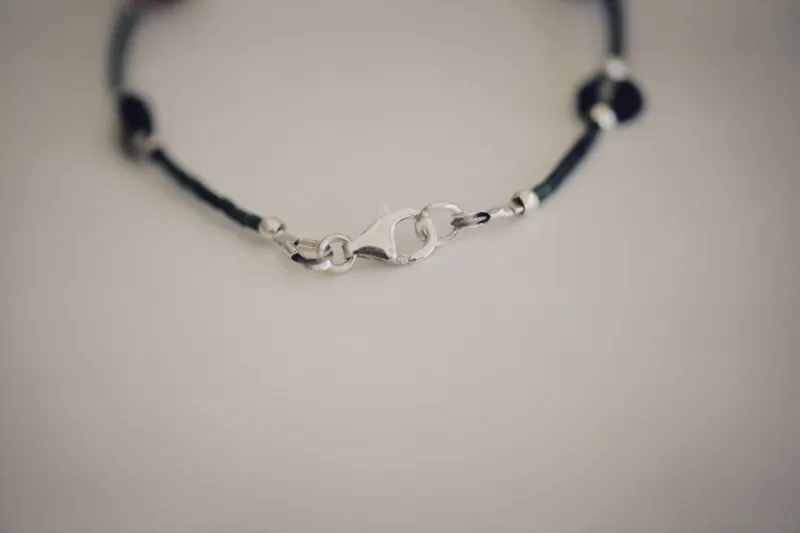
This is the most overlooked pile and the most rewarding. A necklace that never leaves the box because the clasp is fiddly isn't a bad necklace — it's a five-minute fix at the bench. A ring that spins because it's a quarter size off isn't a mistake, it's a sizing job. A chain with a kink, a stud with a loose post, a bracelet with a clasp that opens when you type: these are all repair-pile items, and they are the cheapest way to get new jewelry out of your existing jewelry.
Be honest here, though. Repair is for pieces you'd wear tomorrow if the problem vanished. If the problem vanished and you still wouldn't wear it, it's not a repair. It's a redesign or a release.
Redesign
This pile is for pieces with good bones and wrong endings. The stones from a grandmother's ring. A chain you love with a pendant you've outgrown. A pair of earrings that are beautiful and simply not your life anymore. Redesign is not the same as repair, and it's not something to decide in the same hour. Put these in a separate bag, label it, and make an appointment to talk it through with a maker. Bring the pieces. Bring photos of what you actually wear. A good redesign conversation starts with your daily habits, not with a catalog.
One caution: redesign is not a magic trick for sentimental pieces you don't like. If the feeling is the only thing keeping it in the drawer, a new setting won't fix that. Sometimes the honest move is to keep the memory and release the object.
Release
Release does not mean trash. It means the piece leaves your drawer and goes somewhere useful. Consign it if it has resale value. Gift it to someone whose taste it actually fits — and check first, rather than handing over a burden. Sell it for scrap if it's genuinely scrap, or donate it if that's the right call for you. The only wrong move is letting it sit in the dark for another six months while you feel vaguely bad about it.
What the Piles Are Really Telling You
Lay the four piles side by side and a pattern shows up. If repair is the biggest pile, your taste is fine and your maintenance has slipped — book the bench time. If redesign is the biggest pile, you've inherited or collected more than you've edited, and it's time for a real conversation. If release is the biggest pile, you've been shopping for a version of yourself you've already moved past. That's not a failure. That's just a wardrobe catching up with a person.
And if keep is the biggest pile? Good. That's what a working drawer looks like. A jewelry collection isn't supposed to be a museum. It's supposed to be a set of tools for getting dressed as yourself.
A Few Ground Rules That Make It Easier
Don't do this with music on and a deadline. Speed is the enemy of an honest sort. Don't ask anyone else's opinion until you've made your own piles — other people's taste is useful later, not first. And don't buy anything to "complete" the drawer until the audit is done. The whole point is to find out what you already have.
Six months from now, do it again. The piles will shift. A piece you released will not come back. A piece you repaired will have moved into keep. A piece you kept out of guilt will finally land in release, and you'll feel lighter for it. That's the rhythm: empty, sort, decide, repeat. Not a purge. A reckoning — twice a year, on a Sunday, with coffee. Your drawer will tell you the truth. You just have to open it.