The Word No: Inside a Custom Jewelry Consultation That Didn't Go as Planned
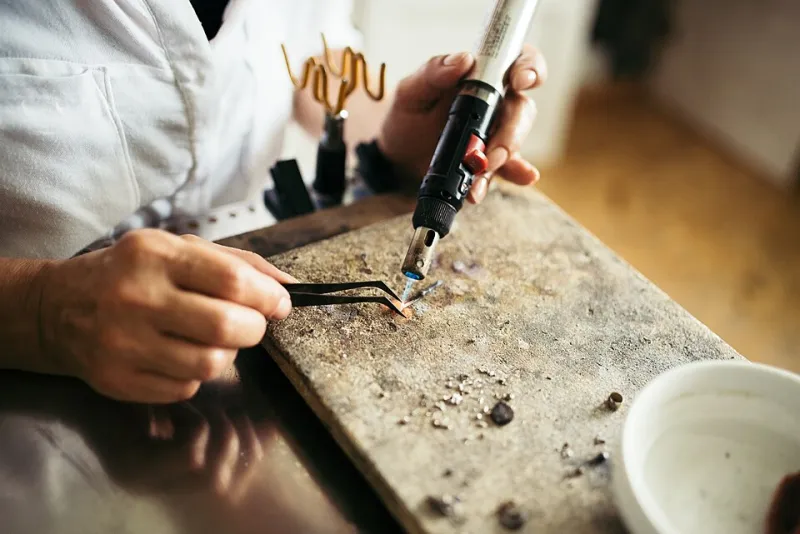
Photo: Shixart1985, CC BY 2.0, via Wikimedia Commons
The Email That Started It
It arrived on a Tuesday morning, the kind of inquiry most studios would circle in red ink: I'd like a replica of a ring I saw on Pinterest, but bigger. Attached were four screenshots — a diamond halo setting, pavé band, the works.
Most custom work begins this way. A picture pulled from someone else's feed, a budget in mind, and a deadline (an anniversary, usually). The polite thing to do is say yes, quote a price, and get to work.
The jeweler I'll call Marisol — she asked that I not use her full name, since her studio is a one-woman operation in a converted garage in Asheville — did something else. She replied: Can we talk before I sketch anything?
When the Consultation Becomes a Conversation
The first meeting lasted two hours, which is unusual. Most consultations run forty-five minutes. Marisol made coffee, asked questions that had nothing to do with the ring, and eventually got to the real story: the client's mother had worn a simple solitaire for forty years. The Pinterest ring wasn't a desire. It was an escape from grief.
"I could have made the halo ring," Marisol told me later. "It would have been fine. It would have looked like a thousand other rings. But she didn't want a ring. She wanted her mother, and I couldn't make that — but I could make something that held her mother."
The mother's original stone, it turned out, was sitting in a bank deposit box, unworn since the funeral. Marisol suggested resetting it. Not in a halo. Not in anything that would bury it under other people's sparkle.
The Art of the Redirect
Here's where things get uncomfortable for anyone raised on the-customer-is-always-right. Marisol steered the client away from nearly everything she'd asked for: no halo, no pavé, no platinum. The final design was a tapered yellow gold band, slightly irregular, holding a single old-cut diamond.
"You're the expert," the client said at one point, half-surrender, half-accusation.
"I'm the maker," Marisol answered. "You're the one who has to wear it."
That distinction matters more than the industry likes to admit. A good jeweler isn't a vending machine for your inspiration board. They're a translator — and sometimes a translator has to tell you that what you asked for isn't what you meant.
Restraint as a Business Model
Marisol turns down roughly a third of the commissions that come her way. Not because she's picky about money — she's a working artist — but because certain requests would compromise the work, and compromised work, she argues, eventually poisons the studio.
"If I make something I don't believe in, it goes out into the world with my name inside the band," she said. "That's the deal. That's always been the deal."
It's a philosophy that runs counter to nearly everything about modern retail, where the default answer is yes and the follow-up question is how fast? But spend an afternoon in a working studio and you start to understand: saying no is a form of quality control. It's also, oddly enough, a form of respect. Marisol respects her clients enough to assume they'd rather have the right piece than the fast one.
What the Client Got
The ring was finished in six weeks. The client cried, which is common in studios but rarely makes the invoice. She also, Marisol mentions with some pride, sent her sister, who commissioned a piece of her own.
That's the quiet economics of honest counsel. A maker who protects the integrity of the work doesn't lose customers — she gains the kind who come back, and bring their people.
The Pinterest ring? Someone else made it. It's probably lovely. It's also probably forgotten in a drawer somewhere, which is the fate of things made without a story underneath them.
The solitaire, meanwhile, is on a hand in North Carolina, worn every day, slightly scuffed at the edges in the way that only living does to gold. Marisol wouldn't have it any other way. Neither, it turns out, would the client.